Introduction
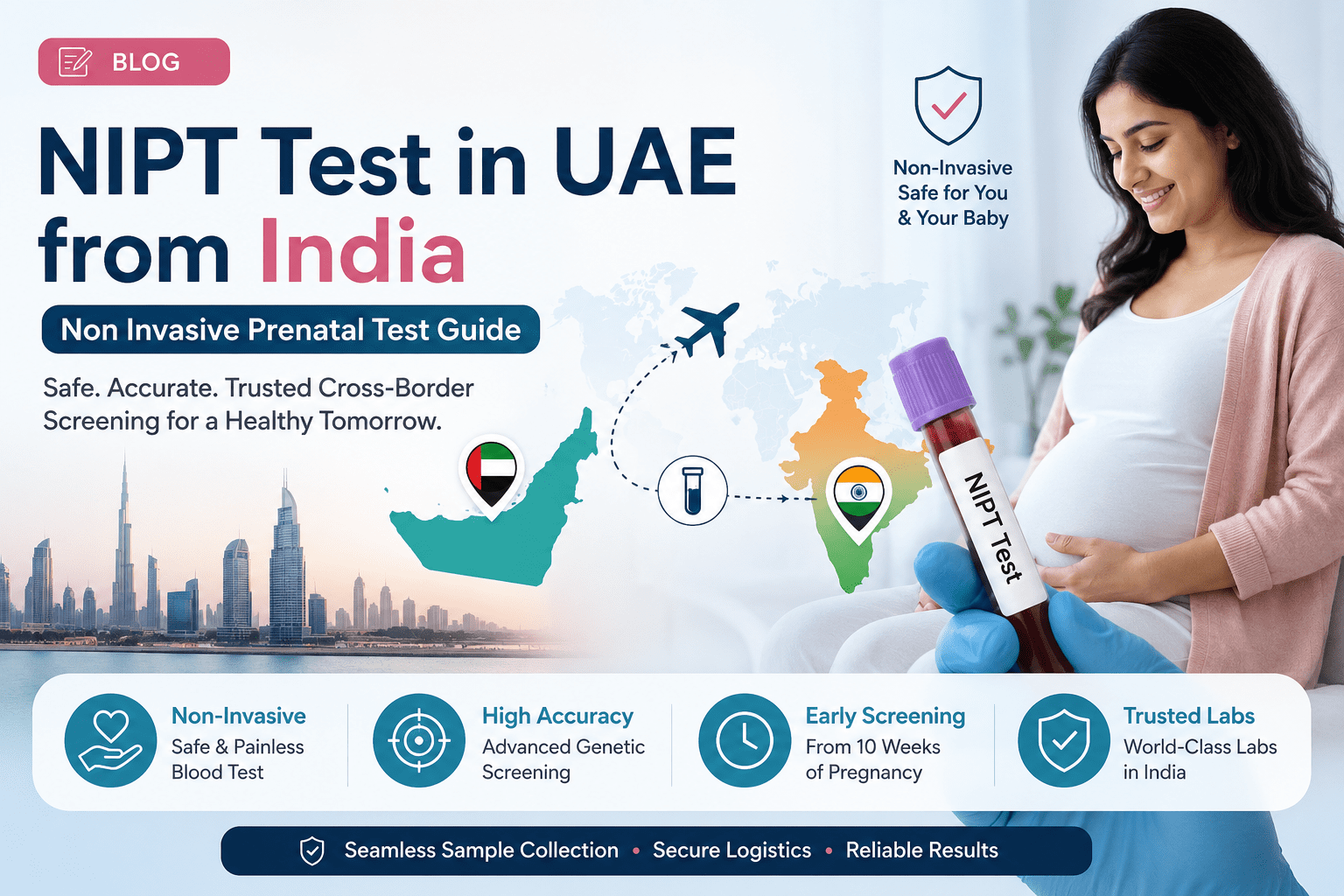
Planning a pregnancy while living in the UAE as an Indian expat comes with its own set of health decisions — and one of the most important is NIPT Test in UAE from India. Whether you are a first-time mother or carrying at an advanced maternal age, non-invasive prenatal testing gives you early, accurate insights into your baby’s chromosomal health — without any risk to you or your baby.
The UAE has emerged as a leading destination for prenatal genetic testing, offering world-class diagnostics that meet — and often exceed — international standards. For Indian families based in the UAE, accessing cross border NIPT services has never been easier or more medically reliable.
This complete guide walks you through everything you need to know: what NIPT is, how it works, where to get it in the UAE, how it compares to what is available in India, and what the results mean for your pregnancy journey.
What Is NIPT? Understanding Non Invasive Prenatal Testing
Non invasive prenatal testing (NIPT) is a highly advanced blood test performed during pregnancy, typically from week 10 onwards. It screens for chromosomal abnormalities in the developing fetus by analyzing small fragments of cell-free fetal DNA (cffDNA) circulating in the mother’s bloodstream.
Because it requires only a simple maternal blood draw, NIPT carries zero risk of miscarriage — unlike invasive procedures such as amniocentesis or chorionic villus sampling (CVS). This is what makes non-invasive prenatal diagnosis a preferred screening tool for millions of expectant mothers worldwide.
What Does NIPT Screen For?
A standard Non Invasive Prenatal Test UAE panel typically screens for:
- Trisomy 21 (Down Syndrome) — the most common chromosomal condition
- Trisomy 18 (Edwards Syndrome)
- Trisomy 13 (Patau Syndrome)
- Sex chromosome abnormalities (Turner Syndrome, Klinefelter Syndrome, and others)
- Microdeletion syndromes (DiGeorge, Prader-Willi, Angelman — depending on panel level)
Advanced panels may also offer fetal sex determination, Rh blood typing, and screening for rare autosomal conditions.
Why Indian Expats in UAE Choose NIPT Testing Locally
For the large Indian expat community in the UAE — one of the most populated expat groups in the country — undergoing prenatal genetic testing in the UAE is often more practical and clinically superior than travelling to India.
Key Reasons to Opt for NIPT Test in UAE
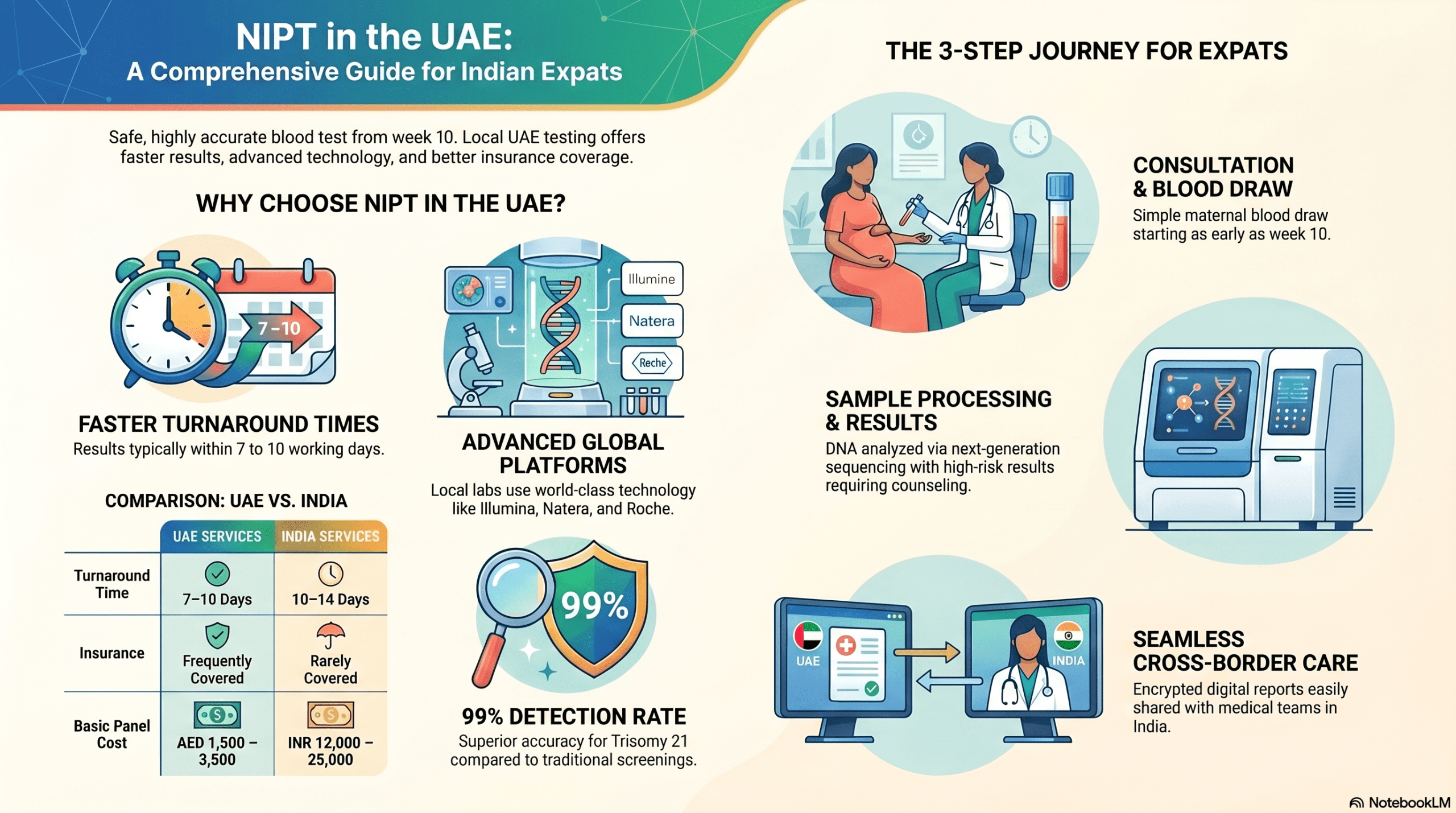
1. Faster Turnaround Times UAE-based laboratories processing NIPT samples typically deliver results within 7 to 10 working days. Some premium labs offer expedited reports in 5 to 7 days. This speed matters when you are in the critical decision-making window of the first trimester.
2. Access to Advanced Testing Panels Prenatal genetic testing UAE facilities often use globally accredited platforms such as Illumina’s VeriSeq, Natera’s Panorama, or Roche’s Harmony. These are the same platforms used in Europe and North America, offering detection rates above 99% for the major trisomies.
3. No Need to Travel Cross border NIPT service UAE providers cater specifically to patients who cannot or do not wish to travel to India for testing. The sample is collected locally, processed in a certified UAE or international lab, and results are delivered directly to your UAE-based gynecologist.
4. Insurance Coverage Several UAE health insurance plans — both government-mandated and private — now include prenatal screening under maternity benefits, which may partially or fully cover the cost of non-invasive prenatal testing.
5. Seamless Follow-Up Care Getting your NIPT done in the UAE ensures your results are immediately available to your local obstetric team, enabling timely counseling, further diagnostic testing if needed, and continuity of care.
How Cross Border NIPT Service UAE Works for Indian Families
Cross border NIPT services are designed for Indian patients who may want to coordinate care between India and the UAE. Here is how the process typically works:
Step 1: Consultation with an Obstetrician or Genetic Counselor
Your first step is a consultation with a UAE-based OB-GYN or a certified genetic counselor. They will review your medical history, gestational age, and any prior screening results (such as first-trimester ultrasound or combined screening) to determine the most appropriate non invasive prenatal test panel for you.
Step 2: Blood Sample Collection
Once your doctor recommends NIPT, a simple venous blood draw — usually two to three tubes — is collected at the clinic or at a partner laboratory. The sample requires no fasting and can be collected as early as 9 to 10 weeks of pregnancy.
Step 3: Sample Processing
The blood sample is shipped to a certified genomics laboratory — either within the UAE or an internationally partnered facility — where fetal cfDNA is extracted and analyzed using next-generation sequencing (NGS) technology.
Step 4: Results and Genetic Counseling
Results are delivered to your physician, typically within 7 to 10 days. A low-risk result provides reassurance with greater than 99% accuracy for the major chromosomal conditions. A high-risk result is not a diagnosis but a recommendation for confirmatory invasive testing such as amniocentesis.
Step 5: Coordinating with Doctors in India (If Needed)
If you plan to deliver in India or want a second opinion from Indian specialists, UAE providers can share encrypted digital reports with your Indian medical team. This makes the cross border NIPT service UAE model particularly valuable for families managing care across both countries.
Top Hospitals and Labs for Prenatal Genetic Testing UAE
The UAE has a robust network of facilities offering non invasive pregnancy tests. Here are the types of providers to look for:
Tertiary Private Hospitals
Major private hospital groups in Dubai and Abu Dhabi — including Mediclinic, Cleveland Clinic Abu Dhabi, Aster Hospitals, NMC Specialty, and LLH Hospital — offer NIPT as part of their comprehensive maternal-fetal medicine (MFM) departments. These institutions have on-site genetic counselors and access to advanced diagnostic platforms.
Standalone Diagnostic and Genomics Labs
Several standalone genomics and diagnostics laboratories in the UAE offer NIPT directly to patients, often at a lower price point than full hospital packages. These labs partner with global genomics companies and send samples to accredited international labs.
Indian-Focused Healthcare Clinics
Given the large Indian expat population, a number of clinics in Dubai and Sharjah are staffed by Indian-trained physicians who are familiar with the concerns and preferences of Indian patients. These clinics often facilitate cross border NIPT service UAE and can coordinate directly with hospitals in India.
NIPT Test Cost in UAE vs India: What to Expect
Cost is often a primary consideration for Indian families. Here is a general comparison:
| Parameter | NIPT in UAE | NIPT in India (Major Cities) |
| Basic Panel (Trisomy 21/18/13) | AED 1,500 – AED 3,500 | INR 12,000 – INR 25,000 |
| Comprehensive Panel (Microdeletions) | AED 3,500 – AED 6,000 | INR 25,000 – INR 45,000 |
| Turnaround Time | 7–10 days | 10–14 days |
| Insurance Coverage | Frequently covered | Rarely covered |
| Genetic Counseling Included | Usually included | Sometimes additional cost |
Note: Prices are approximate and vary by provider and panel selected.
While NIPT in UAE may appear more expensive at face value, insurance coverage can offset a significant portion of the cost. Additionally, the convenience of local testing and faster turnaround often justifies the price difference for expat families.
NIPT vs Other Prenatal Screening Tests: Key Differences
Understanding how non invasive prenatal diagnosis compares to other screening and diagnostic methods helps you make an informed decision.
NIPT vs Combined First Trimester Screening
Combined screening (nuchal translucency ultrasound + blood markers) is offered at 11 to 14 weeks and provides a risk score for Down Syndrome. While useful, its false positive rate is higher than NIPT. NIPT is significantly more accurate — which is why many UAE obstetricians recommend NIPT as the preferred screening method, especially for women over 35.
NIPT vs Amniocentesis
Amniocentesis is a diagnostic test — it can definitively confirm a chromosomal condition. However, it carries a small but real risk of miscarriage (0.1–0.3%). NIPT is a screening test with very high accuracy but is not diagnostic. A positive NIPT result is typically followed by amniocentesis for confirmation.
NIPT vs Quadruple Marker Test (Second Trimester)
The quad screen is a blood test done at 15 to 20 weeks with lower sensitivity for Down Syndrome (75–80%) compared to NIPT (99%+). Most UAE and international guidelines now recommend NIPT over the quad screen for high-risk pregnancies.
Who Should Consider NIPT in UAE?
The following groups are commonly advised to consider a Non Invasive Prenatal Test UAE:
- Women aged 35 years or older at time of delivery (advanced maternal age)
- Women with a previous pregnancy affected by a chromosomal abnormality
- Couples who are known carriers of chromosomal rearrangements
- Women with abnormal ultrasound findings (nuchal translucency > 3mm)
- Women with abnormal combined screening or quad screen results
- Women who have experienced recurrent pregnancy loss
- Any expectant mother who wants early reassurance with minimal risk
It is important to note that NIPT is a screening test, not a mandatory requirement. Your genetic counselor or OB-GYN can help you decide whether it is appropriate based on your individual risk profile.
Understanding NIPT Results: What Do They Mean?
Low-Risk Result
A low-risk (negative) result means the test found no evidence of the screened chromosomal conditions. The probability of the baby having one of these conditions is very low — though not zero, as no screening test is 100% conclusive.
High-Risk Result
A high-risk (positive) result indicates the fetus has a higher probability of having one of the screened conditions. This is not a diagnosis. You will be referred for genetic counseling and offered confirmatory diagnostic testing (amniocentesis or CVS).
No-Result / Inconclusive
In some cases (approximately 1–5%), the fetal DNA fraction in the maternal blood is too low for accurate analysis. A redraw is usually recommended.
Preparing for Your NIPT Appointment in UAE
Here is what to expect and how to prepare:
Before the Test:
- Confirm your gestational age with an ultrasound (must be at least 9–10 weeks)
- Inform your doctor of any multiple pregnancies (twins/triplets — specific panels required)
- Discuss your family history of genetic conditions
- Verify insurance coverage with your provider before booking
On the Day:
- No fasting required
- Wear comfortable clothing for a blood draw
- Bring your Emirates ID, insurance card, and any prior test reports
- Allow 15 to 30 minutes for the appointment
After the Test:
- Results arrive in 7 to 10 business days
- Your doctor will contact you; some labs offer secure online portals
- Schedule a follow-up consultation to review results, regardless of outcome
Final Thought
NIPT test in UAE from India represents one of the smartest, safest, and most accessible prenatal screening options available to Indian expat families today. With a simple blood draw, no risk to your pregnancy, and results that are among the most accurate in modern obstetric medicine, non invasive prenatal testing delivers the peace of mind every expectant parent deserves.
The UAE’s world-class healthcare infrastructure, availability of cross border NIPT service UAE providers, potential insurance coverage, and seamless coordination with Indian medical teams make it an ideal choice for Indian families navigating pregnancy away from home.
If you are pregnant or planning a pregnancy in the UAE, speak to your OB-GYN or a certified genetic counselor today about the right prenatal genetic testing UAE panel for your needs. Early screening, early answers — and a healthier pregnancy journey ahead.
Frequently Asked Questions About NIPT Test in UAE from India
Is NIPT available across all emirates in the UAE?
Yes. NIPT testing is available in Dubai, Abu Dhabi, Sharjah, Ajman, Ras Al Khaimah, and Fujairah through hospital networks, diagnostic labs, and specialized clinics.
Can I share my UAE NIPT report with my doctor in India?
Absolutely. All NIPT reports are issued as detailed PDF documents and can be shared digitally with any physician in India. Most leading Indian geneticists and maternal-fetal medicine specialists are familiar with the major NIPT platforms used in the UAE.
Is NIPT covered by DHA or DAMAN insurance in UAE?
Coverage varies by policy and insurer. Many enhanced and premium maternity plans under DAMAN, AXA, Bupa, and DHA-mandated plans include NIPT or prenatal genetic screening. Always verify with your insurer before proceeding.
Does NIPT tell me the gender of the baby?
Yes, if you choose a panel that includes sex chromosome analysis, your NIPT report will confirm the fetal sex. You can opt out of this information if you prefer to keep it a surprise.
How accurate is NIPT for Down Syndrome?
Non invasive prenatal testing has a detection rate greater than 99% for Trisomy 21 (Down Syndrome), with a false positive rate of less than 0.1% — far superior to all other screening methods currently available.
Can Indian nationals visit the UAE specifically for NIPT?
Yes. Medical tourism to the UAE for prenatal testing is an established practice. Several Dubai and Abu Dhabi hospitals have dedicated medical tourism departments that facilitate appointments, visas, and accommodation for international patients, including those from India.