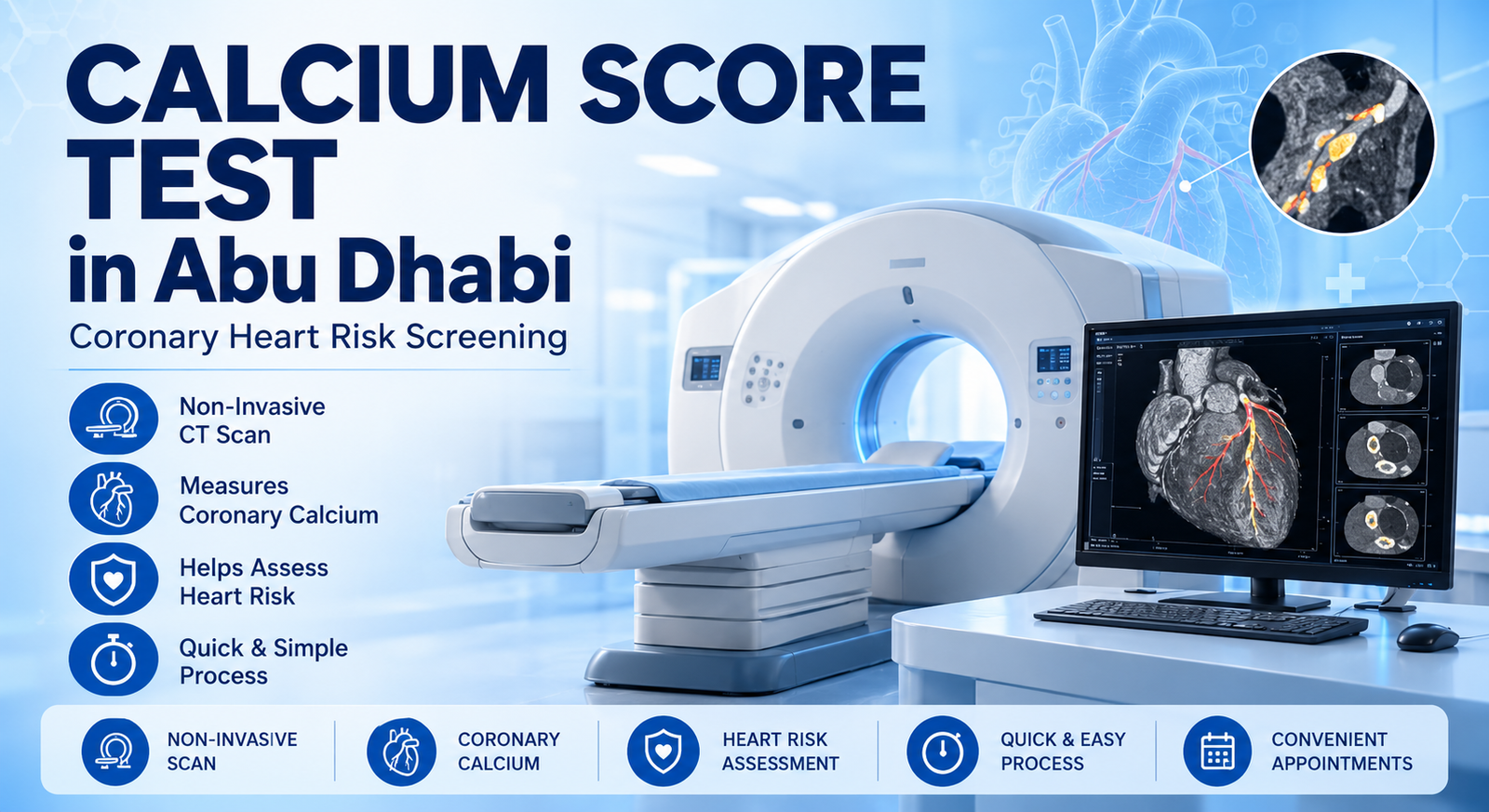
A calcium score test in Abu Dhabi is a non-invasive CT scan that checks for calcium deposits in the coronary arteries. Also called a coronary artery calcium (CAC) scan, it can help assess the presence of calcified plaque in the arteries supplying blood to the heart. Understanding the calcium score cost in Abu Dhabi, what the test includes, preparation requirements, referral needs, and booking process can help you plan your appointment with confidence.
How Much Does a Calcium Score Test Cost in Abu Dhabi?
The calcium score test in Abu Dhabi costs AED 764.50 through HealthBooking.ae. The examination uses CT imaging to detect and measure calcium deposits in the coronary arteries and produces a coronary artery calcium score. The result can provide additional information when assessing cardiovascular risk alongside factors such as age, cholesterol, blood pressure, diabetes, smoking history, and family history. Any additional consultation or investigation, if required, may be arranged separately.
| Calcium Score Test | What It Includes | Price |
|---|---|---|
| Calcium Score / Coronary Artery Calcium Scan | CT-based assessment of calcium deposits in the coronary arteries and calculation of the calcium score | AED 764.50 |
What Is a Calcium Score Test?
A calcium score test is a specialised CT scan that looks for calcium deposits in the walls of the coronary arteries. These deposits can form within plaque associated with atherosclerosis. The scan produces a coronary artery calcium score that reflects the amount of detectable calcified plaque. It is a non-invasive examination and does not involve inserting a catheter into the heart or coronary arteries. Your doctor interprets the result together with your overall cardiovascular risk.
What Does a Calcium Score Scan Include?
A calcium score scan includes CT imaging of the heart to identify and measure calcium deposits in the coronary arteries. During the examination, images are captured while the scanner synchronises with your heartbeat, allowing the coronary arteries to be assessed for calcification. The images are analysed to calculate the coronary artery calcium score, and the findings are reported for review by your healthcare provider. The exact reporting process may depend on the diagnostic facility.
What Does a Calcium Score Tell You?
A calcium score provides information about the amount of detectable calcified plaque in the coronary arteries. In general, a higher score indicates a greater amount of coronary artery calcium. A score of zero means that no detectable calcified coronary calcium was found during the scan. However, the result does not assess every form of plaque or represent your complete cardiovascular risk. Your doctor will consider the score alongside your age, medical history and other risk factors.
What Are the Calcium Score Ranges?
Calcium scores are commonly grouped into broad categories to describe the amount of coronary artery calcium detected during the scan. A score of 0 indicates no detectable coronary calcium, while scores from 1 to 10 are generally considered minimal. Scores of 11 to 100 are commonly described as mild, 101 to 400 as moderate, and scores above 400 as extensive. These categories are general reference points and should be interpreted according to your individual health profile.
| Calcium Score | General Category |
|---|---|
| 0 | No detectable coronary calcium |
| 1–10 | Minimal calcium |
| 11–100 | Mild calcium |
| 101–400 | Moderate calcium |
| More than 400 | Extensive calcium |
Why Would a Doctor Recommend a Calcium Score Test?
A doctor may recommend calcium scoring when additional information is needed to assess cardiovascular risk. The test may be considered for people with factors such as high cholesterol, high blood pressure, diabetes, smoking history, a family history of heart disease, or increasing age. It can be particularly useful when traditional risk factors do not provide enough information for a clear risk assessment. Calcium scoring is not routinely required for everyone, so your doctor can determine whether it is appropriate.
Do I Need a Doctor’s Referral for a Calcium Score Test in Abu Dhabi?
Whether you need a doctor’s referral for a calcium score test can depend on the diagnostic facility and its booking requirements. If your doctor has already recommended the examination, keep the referral or prescription ready for your appointment. If you are considering the scan without a referral, check the booking requirements with HealthBooking.ae before scheduling. Confirming this in advance can help prevent delays and ensure that you have the required documents when you attend the appointment.
What Should I Bring to My Calcium Score Appointment?
If your doctor has recommended a calcium score scan, bring the referral or prescription along with your identification and any relevant medical documents. Previous cardiac imaging reports, laboratory results, or other cardiovascular records may also be useful if they are relevant to your current assessment. If you are using insurance, keep your insurance details available as well. The exact documents required can vary depending on the diagnostic facility and the circumstances of your appointment.
- Emirates ID or required identification
- Doctor’s referral or prescription, if applicable
- Insurance information
- Previous cardiac imaging reports
- Relevant medical records
- Current medication details
Do I Need to Prepare for a Calcium Score Scan?
A standard calcium score scan generally involves minimal preparation, but the exact instructions can vary between diagnostic facilities. You may be asked to avoid certain foods or drinks, particularly caffeine, before the examination, depending on the imaging protocol. You may also need to remove jewellery or other metallic objects before the scan. If you take regular prescription medication, continue following your doctor’s instructions unless the diagnostic centre specifically advises otherwise.
Is Fasting Required for a Calcium Score Test?
Fasting requirements depend on the facility and the specific cardiac CT protocol being used. A standard non-contrast calcium score scan may require little preparation, but some centres may provide instructions about eating or drinking before the appointment. Rather than assuming that fasting is unnecessary, confirm the instructions when booking your test. If you have questions about food, beverages, caffeine, or medication before the scan, ask the diagnostic facility for the correct preparation guidance.
Is Contrast Dye Used for a Calcium Score Scan?
A standard coronary artery calcium scan is generally performed without intravenous contrast dye. This makes it different from CT coronary angiography, which typically uses contrast material to produce detailed images of the coronary arteries. Since cardiac CT protocols can vary depending on the examination requested, it is important to confirm which test you are booking. If your doctor has specifically requested calcium scoring, the examination is generally focused on detecting and measuring coronary artery calcification.
What Happens During a Calcium Score Test?
During a calcium score test, you will lie on a CT scanner table while images of your heart are captured. Monitoring electrodes may be placed on your chest so the scanner can coordinate image acquisition with your heartbeat. You will need to remain still and may be asked to briefly hold your breath while the images are taken. The scan itself is usually quick, after which the images are analysed to calculate your coronary artery calcium score.
Is a Calcium Score Scan Painful?
A calcium score scan is non-invasive and generally painless. There is no catheter inserted into the heart or coronary arteries during a standard calcium scoring examination. You simply lie on the CT scanner table while the equipment captures images of your heart. The procedure does not usually require an injection because standard calcium scoring is performed without intravenous contrast. If you have concerns about the examination, the imaging team can explain what will happen before the scan begins.
How Long Does a Calcium Score Scan Take?
The actual CT image acquisition for a calcium score scan is usually completed within a short period. However, the total time at the diagnostic centre can be longer because it may include registration, preparation, positioning, monitoring, image acquisition, and reporting. Your appointment confirmation can provide more information about the expected timing. Arriving a little early can also give you enough time to complete registration and provide any required referral, identification, or medical documents.
Is a Calcium Score Scan Safe?
A calcium score scan is a non-invasive CT examination, but it does involve exposure to a small amount of ionising radiation. The examination should therefore be performed when it is clinically appropriate and when the information it provides is useful for assessing cardiovascular risk. If you are pregnant or think you may be pregnant, inform your doctor and the imaging facility before undergoing the scan so that the appropriate assessment can be made.
Can a Calcium Score Test Detect Blocked Arteries?
A calcium score test detects and measures calcified plaque in the coronary arteries, but it does not directly measure the percentage of narrowing inside an artery. A calcium score can therefore provide information about coronary calcification without showing exactly how much an artery is blocked. If your doctor needs detailed information about coronary artery anatomy or suspected narrowing, another examination such as CT coronary angiography may be considered based on your symptoms and clinical assessment.
What Does a Calcium Score of Zero Mean?
A calcium score of zero means that the scan did not detect calcified plaque in the coronary arteries. This indicates that no measurable coronary calcium was identified during the examination, but it does not completely exclude cardiovascular disease or non-calcified plaque. Your doctor will consider the result alongside other factors such as age, cholesterol, blood pressure, diabetes, smoking history, family history, symptoms, and overall cardiovascular risk before deciding whether further assessment is needed.
What Happens if My Calcium Score Is High?
A higher calcium score indicates a greater amount of detectable calcified plaque in the coronary arteries. It does not automatically mean that a specific artery is completely blocked, because the calcium score measures the amount of calcification rather than directly measuring arterial narrowing. Your doctor may consider the result together with your other cardiovascular risk factors and may recommend lifestyle changes, preventive treatment, or additional cardiac assessment depending on your individual circumstances.
What Is the Difference Between a Calcium Score Scan and CT Coronary Angiography?
Both calcium scoring and CT coronary angiography use CT technology, but they provide different information. A calcium score scan is primarily used to detect and quantify calcified plaque and is generally performed without contrast. CT coronary angiography usually uses contrast dye to produce detailed images of the coronary arteries and can help evaluate their anatomy and possible narrowing. Your doctor can recommend the appropriate examination based on your symptoms, risk factors, and the clinical information required.
| Feature | Calcium Score Scan | CT Coronary Angiography |
|---|---|---|
| Main purpose | Detect and quantify coronary artery calcium | Assess coronary artery anatomy |
| Contrast dye | Usually not required | Usually required |
| Main result | Coronary artery calcium score | Detailed coronary artery images |
| Procedure | Non-invasive | Non-invasive |
| Main information | Detectable calcified plaque | Coronary artery structure and possible narrowing |
Who Should Consider a Calcium Score Test?
Calcium scoring may be considered for selected people when additional information is needed to assess their cardiovascular risk. A doctor may discuss the test when factors such as high cholesterol, high blood pressure, diabetes, smoking history, family history of heart disease, or age contribute to the overall risk assessment. The scan is not intended as a replacement for a medical consultation or routine cardiovascular assessment. Your doctor can determine whether the test is appropriate for you.
What Factors Can Affect the Cost of a Calcium Score Test in Abu Dhabi?
The calcium score cost in Abu Dhabi can differ between healthcare providers depending on the imaging service, reporting arrangements, consultation requirements, and whether additional examinations are needed. When comparing services, check whether the quoted price includes the CT examination and report or whether additional charges may apply. At HealthBooking.ae, the calcium score test is available for AED 764.50, giving patients a clear price when planning their appointment.
What Should I Ask Before Booking a Calcium Score Test?
Before booking your calcium score scan, confirm a few practical details so you know what to expect. Ask whether a doctor’s referral is required, whether the appointment is for a standard coronary artery calcium scan, whether fasting or caffeine restrictions apply, whether contrast dye is used, and whether the radiology report is included in the price. You can also confirm the expected appointment duration and how and when you will receive your results.
How to Book a Calcium Score Test in Abu Dhabi
You can book a calcium score test in Abu Dhabi through HealthBooking.ae for AED 764.50. Select the calcium score service, provide your booking information, and choose a convenient appointment. If your doctor has provided a referral or prescription, keep it ready and confirm whether it needs to be presented at the appointment. Before attending the scan, follow the preparation instructions provided by the diagnostic facility and bring any relevant medical reports.
Calcium Score Cost in Abu Dhabi: Book Your Scan
The calcium score test in Abu Dhabi costs AED 764.50 through HealthBooking.ae. The non-invasive CT scan checks for calcified plaque in the coronary arteries and produces a coronary artery calcium score that can be considered as part of a broader cardiovascular risk assessment. Before booking, confirm whether you need a doctor’s referral, check the preparation instructions, and bring any relevant medical documents. If you are unsure whether calcium scoring is suitable for you, discuss the test with your doctor.
Frequently Asked Questions
Can I book a calcium score test directly in Abu Dhabi?
You can book a calcium score test in Abu Dhabi through HealthBooking.ae. Choose the available calcium score service and submit your booking details to arrange an appointment. If the diagnostic facility requires any additional documents or medical information before the scan, you can confirm these requirements during the booking process.
How soon can I get a calcium score test appointment in Abu Dhabi?
Appointment availability depends on the diagnostic facility and available time slots. HealthBooking.ae allows you to request a calcium score test in Abu Dhabi and choose an appointment based on current availability. If you need the scan within a particular timeframe, check the available dates when making your booking.
How soon will I receive my calcium score results?
The time required to receive your calcium score report can vary depending on the diagnostic facility and its reporting process. Ask about the expected report turnaround time when booking your appointment, especially if you need the results for an upcoming cardiology or doctor consultation.
Can I book a calcium score test for my parents or family member?
Yes, you can arrange a calcium score test for a family member through HealthBooking.ae by providing the required patient and appointment details. Before booking, make sure the person undergoing the scan has any relevant referral, identification, previous cardiac reports, or other documents requested by the diagnostic facility.
Can I get a calcium score test as part of a heart health check-up?
A calcium score test may be included as part of a broader cardiovascular assessment when clinically appropriate. If you are interested in checking your heart health, discuss your risk factors with a healthcare professional to determine whether calcium scoring or another cardiac test would provide the most relevant information for you.
Can I book a calcium score test if I have no heart symptoms?
Calcium scoring may be considered for some people without symptoms when additional information about cardiovascular risk is needed. Whether the test is useful depends on factors such as your age, cholesterol, blood pressure, diabetes, smoking history and family history. A healthcare professional can help determine whether calcium scoring is appropriate for your risk profile.